The Artwork
Nothing to Lose
Sculptural Installation
Los Angeles Law Library
May 1 - May 31, 2026

“It is our duty to fight for our freedom. It is our duty to win. We must love each other and support each other. We have nothing to lose but our chains."
Assata Shakur
Nothing to Lose is a temporary sculpture of wooden handcuffs meticulously crafted from the oak of a repurposed library table. Informed by Black liberation activist Assata Shakur and the legacy of the Civil Rights movement in the United States, the words, “We have nothing to lose, but our chains,” are carved onto the wooden handcuffs, the chain links are broken. The sculpture references the handcuffs manufactured by Hiatt and Company, an English company historically known for their production of steel, chains, and shackles used during the transatlantic slave trade, and connects the enduring impact of American slavery with the Prison Industrial Complex. Once a library table that has now been transformed into a sculpture and placed back into its original environment, Nothing to Lose encourages the public to study the U.S. criminal justice system and carefully consider the importance of social justice in their community. It serves as a revolutionary visual call and response, urging collective action toward radical love, solidarity, and liberation.
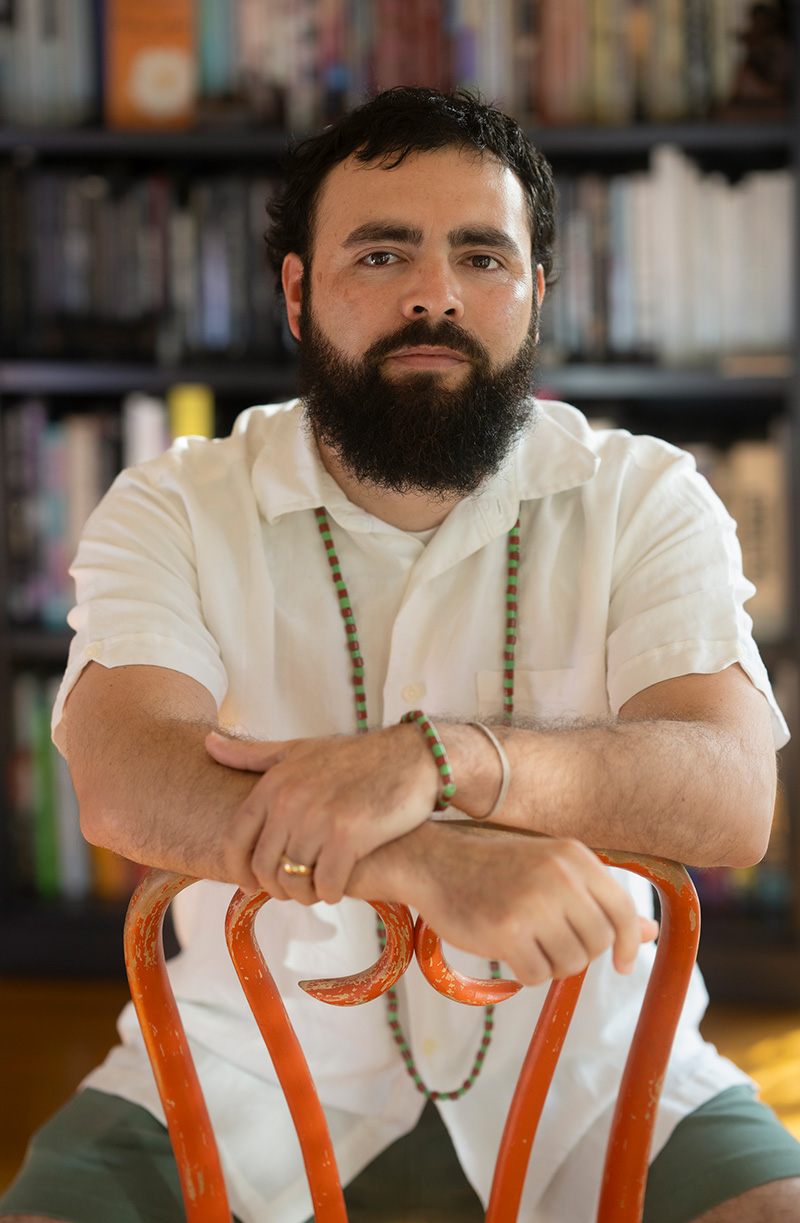
Originally from San Diego and working in Los Angeles, California, noé olivas is a multidisciplinary artist, cultural worker, and cofounder of Crenshaw Dairy Mart, a community space centering ancestry, abolition, and healing. He was raised in a working-class, first-generation Mexican family, where labor was not abstract but everyday, embodied, and inherited. This lived experience grounds his artistic practice. Working across sculpture, installation, ceramics, painting, drawing, printmaking, video, performance, site-specific intervention, and archival research, olivas’ work explores what he refers as the Poetics of Labor: the socio-political and spiritual dimensions of labor, lineage, and liberation. Through collaboration with community members, he engages the invisibility of labor while tracing its circulation between Southern California and the U.S.–Mexico border. olivas’ practice asserts that creativity is inseparable from community. He approaches art-making as a form of spiritual repair; an act of care, healing, and collective remembrance that honors and embodies ancestral knowledge and lived experience. Rooted in the Chicanx tradition of rasquachismo, his work challenges conventional distinctions between the aesthetic and the utilitarian. Rasquachismo embodies resilience, resourcefulness, and transformation. By working within this tradition, he reshapes materials to generate new meanings and affirm labor as a site of dignity, creativity, and renewal.